

Buddha Teachings : ค้นหาหนังสือธรรมะ หน้า 3 / 30
หน้าหนังสือทั้งหมด
215
The Tathāgata and the Cycle of Enlightenment
Yāva kivāñca me bhikkhave, imesu "O! Monks! If the Tathāgata had not fully com-
catusu ariyassaccevaṁ tiparivattaṁ completed these three cycles with their twelve com-
dvaḍasākāraṁ yathābhuṭṭaṁ nān
In this text, the Buddha addresses monks, emphasizing that he has fully completed the three cycles of truth, which affirms his status as a fully self-enlightened Buddha. He claims that this enlightenm
32
Nagasena's Enlightenment and Teachings
After listening to Rohana, Nagasena was impressed with what Rohana had to say and thus he desired to learn more about the Buddha's teachings. Nagasena then asked for permission from his parents to be
Nagasena, inspired by Rohana, sought to learn the Buddha's teachings and was ordained as a novice. Through pure living and dedicated practice, he attained enlightenment and became proficient in Buddhi
40
Understanding Dhammakāya in Aṅgāṇā-sutta
In brief, contemporary academics refer to the term dhammakāya in the Aṅgāṇā-sutta either as a noun or an adjective. As a noun, the term is interpreted mostly as the Buddha’s teachings collected togeth
The term dhammakāya is interpreted in contemporary academia as both a noun and an adjective. As a noun, it denotes the Buddha’s teachings, while as an adjective, it refers to the nature of the Tathāga
103
The Noble Eightfold Path and Buddhist Sainthood
fold Path diligently to the extent they are prepared to lay down their life for their practice, have the chance to uproot craving from the mind by transcendental extinction — by attaining the various
This text discusses the profound dedication of practitioners of the Noble Eightfold Path, illustrating how some are willing to sacrifice their lives for their spiritual journey. It highlights notable
199
Lessons from the Lord Buddha on Conflict Resolution
3) When the Lord Buddha was confronted by a furious elephant (similar to a frantic person), His solution was to spread loving kindness. In short, when people receive and are moved by loving kindness,
This text highlights the Buddha's approach to handling conflict, using love and understanding as tools for resolution. In facing a furious elephant, He spread loving kindness to expand hearts and fost
76
Understanding the Terms Kevala and Dhammakāya in Buddhist Texts
Generally, the term ‘kevala’ is translated either as ‘only’ or ‘entirely.’ It is observed that, whenever the term appears together with another word that conveys the meaning of ‘emanating,’ ‘illuminat
This text explores the interpretation of key Buddhist terms such as 'kevala', which denotes 'only' or 'entirely', particularly in contexts associated with illumination. The term 'dhammakāya', often li
102
Wisdom and the Dhammakāya in Buddhist Teachings
Some of the qualities or forms of wisdom listed in the text are exclusive to Buddhas such as omniscience (sabbaññutāna), intrepdity (vesārajjanāna), and the ten supreme intellectual powers of a Buddha
The text highlights unique qualities of wisdom exclusive to Buddhas, including omniscience and the ten intellectual powers. It discusses the dhammakāya as the embodiment of a Buddha's inner wisdom, di
45
The Teachings of the Buddha: Understanding Enlightenment
Suzanne Jeffrey
why we are here and where do we go after death. So, we have some questions regarding His life: for example, why did he spend six years in self-mortification? Is the number six signifi
In this teaching, Luang Por discusses the significance of the Buddha's life and his journey towards enlightenment. Born into wealth and possessing unique qualities, the Buddha sought wisdom from an ea
33
Ordination Traditions during the Time of the Buddha
There are numerous stories of those who had enough faith to push them to be ordained since the time of the Buddha. In each and every story, there are many lessons that can be learned, one common theme
This text discusses the ordination traditions during Buddha's time, emphasizing the importance of faith and perseverance for liberation from suffering. It recounts the story of Buddha's own ordination

198
การแก้ปัญหาตามหลักธรรม
teaching ourselves humility and modesty. There may be times
when an apology is required. Some difficulties are caused by
our own carelessness, perhaps by damaging others'
possessions, which can be sol
teaching ourselves humility and modesty. There may be times when an apology is required. Some difficulties are caused by our own carelessness, perhaps by damaging others' possessions, which can be sol
181
Understanding External and Internal Fools in Buddhism
1) External Fools include non-Buddhists. They are determined to demolish Buddhism, whether they are of other religious affiliations or not. They typically try to cast aspersions upon Buddhist monks. W
In Buddhism, External Fools are non-Buddhists who seek to distort and undermine Buddhist teachings, casting aspersions on monks and creating confusion. Internal Fools, on the other hand, are Buddhists
38
Understanding the Concept of Dhammakāya in Buddhist Thought
D.III.84
Vāsettha and Bhāradvāja, he whose confidence in the
Tathāgata is settled, rooted, established, solid, irremovable by
any ascetic or brahmin, any deva or Māra or Brahmā or anyone
in the world
In this passage, Vāsettha and Bhāradvāja discuss the unwavering confidence in the Tathāgata, stating that those deeply rooted in dhamma can claim to be heirs of dhamma. The term 'dhammakāya' and its i
124
Understanding Dhamma and the Path to Enlightenment
Attaining Dhamma: meditative attainment; a state of absorption in meditation where the mind achieves super insight and knowledge; knowing and seeing according to the truths.
Attaining the Dhammakaya:
…ghtenment. It highlights Buddha's role as the ‘awakened one’ and explains the historical context of Buddha teachings. The term ‘mangala’ refers to blessings that foster success, while the notion of the field of merit…

197
บทเรียนจากพระพุทธเจ้า
Since we must seek refuge in our own wisdom in times
of sorrow and happiness, we can appreciate that the Lord
Buddha's supreme wisdom (of how to lead one's life) is indeed
comparable to none. His pure
Since we must seek refuge in our own wisdom in times of sorrow and happiness, we can appreciate that the Lord Buddha's supreme wisdom (of how to lead one's life) is indeed comparable to none. His pure
11
The Teachings of Luang Por Dattajeevo
Suzanne Jeffrey
Life, of course, is not as neat as these teachings are laid out for you, and we do not always meet
life’s stresses, or sufferings, head-on with a Dhamma teaching. When I become frustr
Suzanne Jeffrey reflects on her journey of understanding Dhamma teachings through the wisdom of Luang Por Dattajeevo. She shares insights into dealing with life's challenges, the importance of mindful
2
The Warm Hearted Family
The Warm Hearted Family
S.Phongsawasdi
ISBN:978-974-09-7376-8
A Dhammakaya Foundation paperback
First edition 2007
Published by the Dhammakaya Foundation
Department of Foreign Affaire
40 Moo 8., Khlon
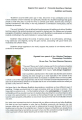
The Warm Hearted Family, published by the Dhammakaya Foundation, emphasizes the importance of the Lord Buddha's teachings as universal spiritual truths. The message conveyed on the occasion of the Wor

181
Internal and External Fools in Buddhism
1) External Fools include non-Buddhists. They are
determined to demolish Buddhism, whether they are of other
religious affiliations or not. They typically try to cast aspersions
upon Buddhist monks. W
1) External Fools include non-Buddhists. They are determined to demolish Buddhism, whether they are of other religious affiliations or not. They typically try to cast aspersions upon Buddhist monks. W
8
The Role of Buddhism in Society
"Digested from speech of Pramạhā Boonthavy Vilaichakr Buddhism and Society
"Buddhism occurred 2500 years ago in India. Since then it has contributed a lot to the human civilization of both materialit
Buddhism, which originated 2500 years ago in India, has profoundly influenced human civilization both materially and spiritually. Its teachings guide individuals to avoid wrongdoing, purify minds, pro
78
The Teachings of the Buddha
The Teachings of the Buddha
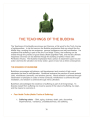
The Teachings of the Buddha are known as Dhamma, a Pali word for the Truth, the law of righteousness. In his first sermon the Buddha emphasized that one should live the Mi
The Teachings of the Buddha, known as Dhamma, emphasize the Middle Way, avoiding extremes of indulgence and self-mortification. Central to Buddha's teachings are the Four Noble Truths, which acknowled
191
The Significance of the Dhammacakka Pavattana Sutta
Siddhattha's footsteps. When Siddhattha was training him-self under the auspices of Ālara and Udaka it was Koṇḍañña who was also to train himself in Siddhattha's footsteps. Thus, Koṇḍañña, along with
The Dhammacakka Pavattana Sutta is pivotal in Buddhism, offering a master-plan for all subsequent teachings by the Buddha. It was delivered to a group of five adept meditators, setting a clear framewo